"The opening of the La Brea/Wilshire Metro station makes getting around car-free possible for our neighborhood," Laura Foti Cohen wrote in Larchmont Buzz last April. She described herself as a former New Yorker who had been "waiting impatiently through years of meetings, road closures, Brookside stream flow interruption and construction delays."
The wait ended on May 8, 2026. That was a few weeks after LACMA opened its David Geffen Galleries to members on April 19. Five months on, the two openings line up in a way that matters on Rimpau and Lorraine. The museum's fall calendar is about the American home between the 1920s and the 1980s. Its biggest show of the season is about an architect who designed more than 20 houses in Hancock Park. And Hancock Park now has a subway to the galleries.
A Season About the Kitchen Table
The exhibitions LACMA has scheduled for this fall share one question: how a house gets imagined, sold and lived in. The calendar runs from late August into the start of next summer, so the shows overlap rather than following one another.
| Exhibition | Dates | What it covers |
|---|---|---|
| Eileen Cowin: Between Panic and Paradise | Aug 23, 2026 – Jan 3, 2027 | Photography and video on "the monotony and mystery of daily life" |
| Textile Alchemy: The Art of Reiko Sudō and NUNO | Sept 20, 2026 – Mar 7, 2027 | More than 100 limited-edition textiles, many used by architects |
| Home of the Future, 1925–1985: Designing Domestic Utopias | Sept 27, 2026 – Mar 14, 2027 | How the home of tomorrow was "imagined, packaged, and sold" |
| The Kitchen and Its Discontents | Sept 27, 2026 – Mar 14, 2027 | Two landmark modernist kitchens from LACMA's collection |
| The Brockman Gallery: Los Angeles, 1967–1990 | Oct 18, 2026 – Jan 24, 2027 | The South L.A. gallery founded by Alonzo and Dale Brockman Davis |
| Paul R. Williams: Architect for Living | Nov 15, 2026 – May 31, 2027 | The Los Angeles architect's archive drawings and photographs |
The two shows that opened on September 27 are the core of the season. Home of the Future uses architectural models, drawings, photographs, films and objects "ranging from sinks to television sets" to show how push-button appliances, self-cleaning kitchens and plastic houses assembled in a day shaped American ideas about living well. The museum says it also asks "who was excluded from that future, and who imagined radical alternatives."
The Kitchen and Its Discontents is a smaller companion show. It pairs Margarete Schütte-Lihotzky's 1926–30 kitchen for the New Frankfurt social housing program with the 1948–50 kitchen Charlotte Perriand and Le Corbusier designed for L'Unité d'Habitation in Marseille. Both kitchens were attempts to bring efficiency and modular design into the home. LACMA's own description admits "the reality was always more complicated."
Look at the dates on that first show. Home of the Future covers 1925 to 1985. Paul R. Williams designed his first Hancock Park houses in the late 1920s and finished his last one here in 1965. The museum is presenting the national story of the century's domestic dreams. A good share of the local story was built a short walk north of Wilshire.
The Architect Who Kept Coming Back to Rimpau
LACMA calls Williams "the most prominent Black American architect of his generation." It says he helped shape Los Angeles "during its rapid growth from the 1920s through the early 1970s" with residential, civic, religious, commercial and hospitality work, from public housing to hotels in Southern California, Las Vegas and Latin America. Architect for Living will show drawings and photographs from his archive that have never been exhibited before. It runs alongside presentations at the Getty Research Institute and the USC Fisher Museum of Art. LACMA calls the three together "the largest and most comprehensive museum presentations to date" of his work. Staci Steinberger is listed as curator.
He is best known for the stars, Beverly Hills and Brentwood. The Larchmont Chronicle points out that he "also designed a substantial body of work in and around Hancock Park over the course of four decades," and kept returning to projects here even as his Westside practice grew. In order of construction, the local houses the Chronicle has documented are:
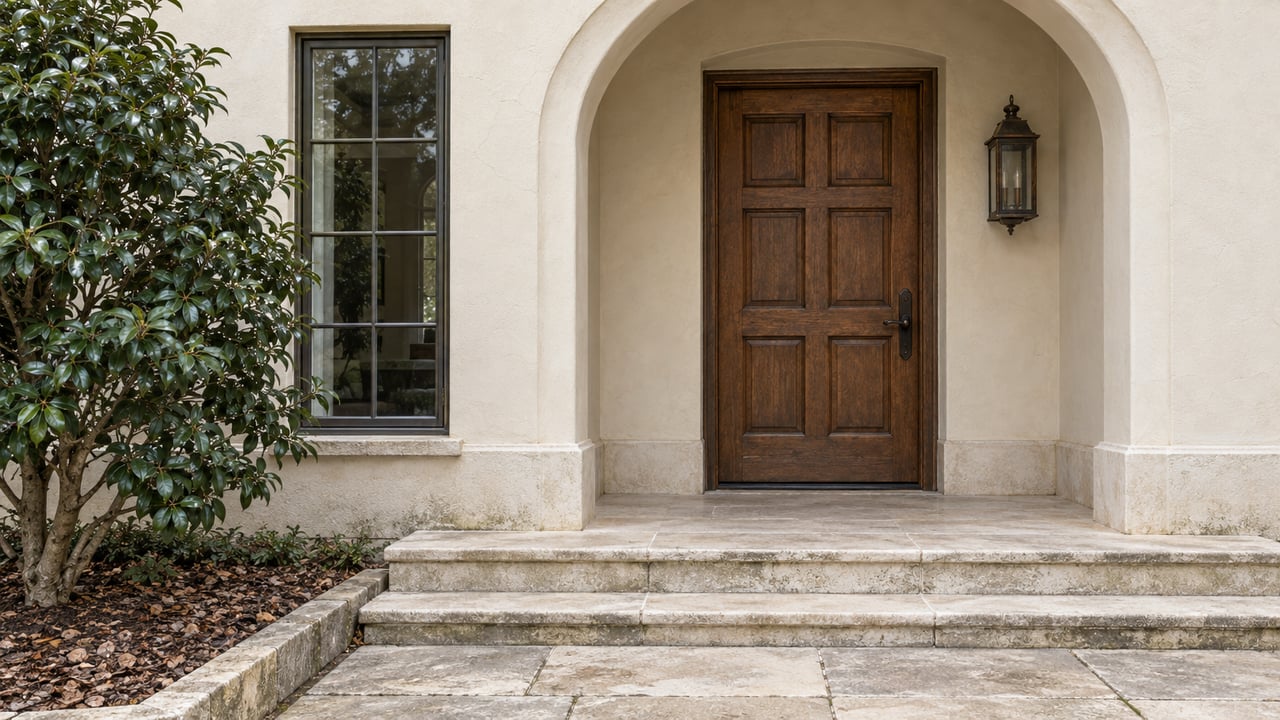
- The Leistikow house, 524 Lorraine Boulevard, Windsor Square. Williams' first house in the community, built for financier Frederick Leistikow. The Chronicle says he "eschewed the popular Spanish revival" here for a pared-down Tudor with a light-filled interior.
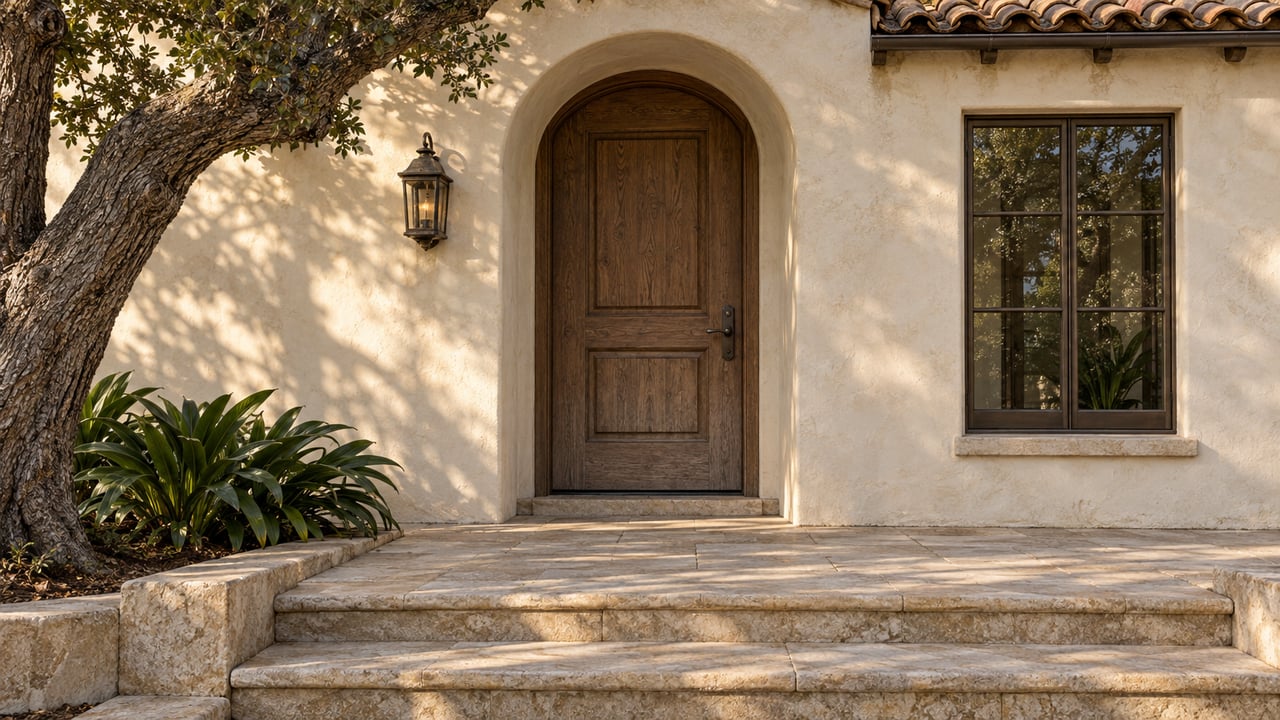
- The Bachman House, 1927, Hancock Park. A Spanish Colonial Revival residence for Walter and Juliet Bachman, built on land bought directly from developer G. Allan Hancock as he began subdividing the neighborhood.
- The Davey House, 1930, Fremont Place. A relaxed two-story Monterey-style house for Alfred Dewey and Ruth Davey. The Ministry of Foreign Affairs of Mexico acquired it in 1994 as the residence of its consul general in Los Angeles.
- The Goodwin House, 1931, South McCadden Place. A Colonial-inspired house for Sarah Belle Goodwin, designed to accommodate three generations of her family.
- The Collins House, 1932, Lorraine Boulevard, Windsor Square. A two-story French Country residence for William and Helen Collins. The Chronicle says it ranks among the architect's personal favorites.
- The Ridgway house, 232 Rimpau Boulevard, 1965. His last Hancock Park residence, finished for Edwin Ridgway.
Between 1927 and 1932 alone, the Chronicle's list moves from Spanish Colonial Revival to Monterey, Colonial and French Country, and that's after a Tudor first house on Lorraine. The Chronicle credits him with "harmonious proportions and signature undulating lines" that made his houses "simultaneously graceful and relaxed." Taken together, these houses cover much of what period-revival Los Angeles looked like before the futurism in the Home of the Future galleries took over the magazines.
All six are private homes. They are best seen from the sidewalk. LACMA has not published a checklist of the buildings in Architect for Living, so none of these houses should be assumed to appear in the galleries. You get the archive drawings at the museum and the finished houses on the walk home.
One Stop From Wilshire/La Brea
Metro lists the Wilshire/La Brea station as serving Miracle Mile, Park Mile and Hancock Park. Wilshire/Fairfax serves Hancock Park, Mid-Wilshire and the Fairfax District, steps from LACMA, the Academy Museum, Craft Contemporary, the La Brea Tar Pits and the Petersen Automotive Museum. LACMA's own exhibition page for the Williams show tells visitors that "the D Line now brings you directly to LACMA" at the Fairfax station.
Metro's launch guide says trains run from about 4:10 a.m. to about 12:30 a.m. every day of the year. They come every 10 minutes for much of the day on weekdays and weekends, and every 20 minutes early in the morning and late at night. Metro also reported that D Line ridership in May 2026 was 62 percent higher than in May 2025. It estimated the three new stations added 8,000 to 10,000 rides a day after opening, and weekend ridership was nearly 80 percent higher than the year before. Those are linewide numbers, not a count of Hancock Park riders. Still, the jump on weekends fits a line that now ends among museums.
On opening day, a Fairfax-area resident told the Los Angeles Times, "It makes us a fuller city."
Timing a Visit
Whether you pay depends mostly on when you go. LACMA offers free general admission to:
- L.A. County residents with valid ID, on weekdays after 3 p.m.
- L.A. County residents 17 and younger, every day
- All visitors on the second Tuesday of each month
- Bank of America cardholders on the first full weekend of every month
Otherwise, L.A. County adults pay $25 and county seniors pay $21. LACMA asks visitors, including those who get in free, to buy or reserve timed-entry tickets, and general admission covers the whole museum and all current exhibitions.
That makes the calendar easy to plan. The next free second Tuesdays are October 13 and November 10. Architect for Living opens Sunday, November 15, so the first free second Tuesday after its opening is December 8. If you go on a weekday after 3 p.m., Erewhon at LACMA on the W.M. Keck Plaza is open until 5:30 p.m. Monday, Tuesday and Thursday and until 6 p.m. on Fridays. It is closed on Wednesdays. It overlooks Alexander Calder's fountain Three Quintains (Hello, Girls). LACMA says a full-service restaurant and wine bar will open in fall 2026 but has not yet announced a name or opening date.
You don't need a ticket to spend time under the Zumthor building. Its raised gallery floor shades 3.5 acres of public space. The plaza pavement is Mariana Castillo Deball's 220,000-square-foot artwork Feathered Changes. From there, the La Brea station is one stop east, and Rimpau Boulevard is a walk north from the station.
Our team at Jose Prats spends most of its time in houses from exactly this period, from Spanish Colonial and Tudor to Monterey. If Architect for Living leaves you wanting to see more Williams-era craftsmanship, we're always glad to talk about the period details that make a Hancock Park house what it is. Discover character homes and schedule a showing with us.