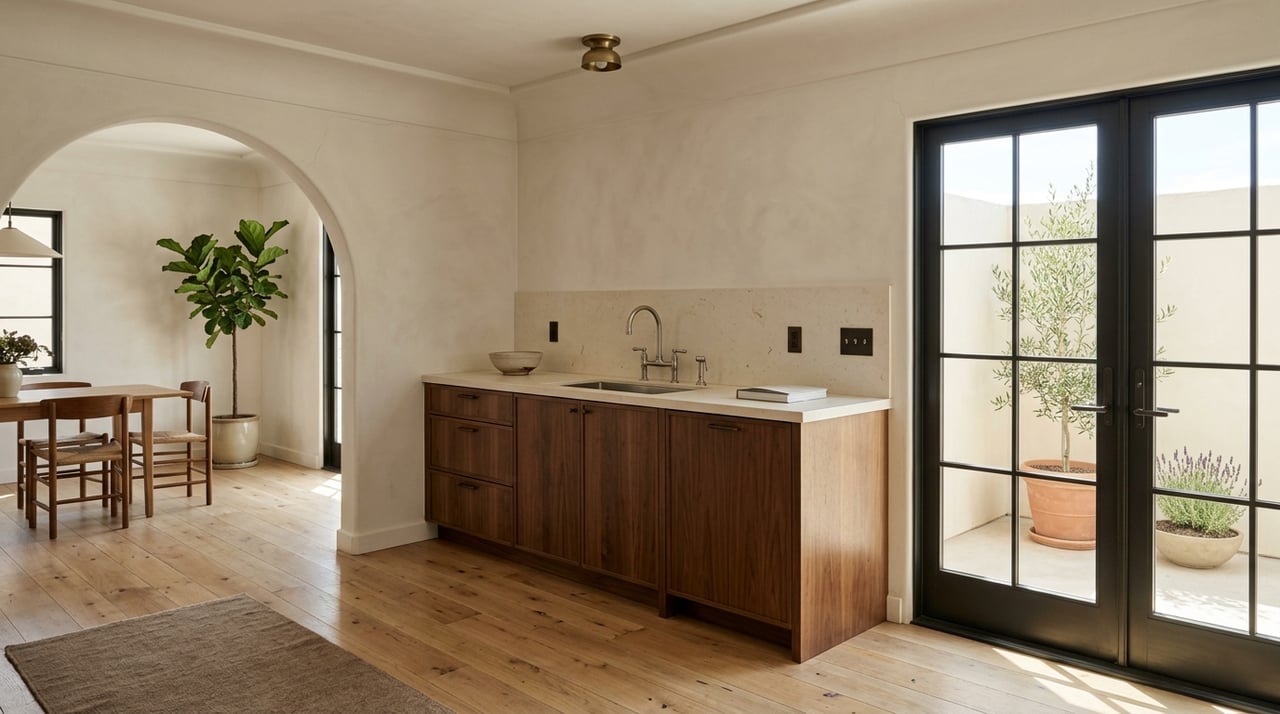
Wondering how to modernize a Santa Monica character home without stripping away the details that made you fall for it in the first place? You are not alone. In a city where Spanish revivals, bungalows, and Mid-Century homes still shape the streetscape, a smart renovation is usually less about changing everything and more about understanding what should stay. This guide will help you think through preservation rules, style-defining features, and practical upgrades so you can renovate with clarity and respect. Let’s dive in.
Why Santa Monica preservation matters
Santa Monica places real value on its architectural history. The city continues to identify and preserve historic resources through landmarks, historic districts, and the Historic Resources Inventory, often called the HRI. That matters because a home’s status can directly affect what you can change on the exterior.
Before you sketch plans or call a contractor, find out whether the property is simply listed on the HRI or whether it is a designated Landmark, Structure of Merit, or part of a historic district. That distinction is important. In Santa Monica, HRI-listed single-family homes do not require design review for exterior renovations, but they are still subject to demolition limitations.
For designated resources and properties in historic districts, the rules are more involved. These homes generally need a Certificate of Appropriateness before alteration, restoration, construction, removal, relocation, or demolition, unless an exemption applies. The city also allows some ordinary exterior maintenance or repair without that certificate when there is no detrimental change, subject to administrative review.
Start with the home’s status
One of the most important early steps is confirming exactly how the city classifies the property. Santa Monica’s preservation framework is not one-size-fits-all, and your renovation path can look very different depending on the answer.
Here are the first questions to answer:
- Is the home listed on the Historic Resources Inventory?
- Is it a designated Landmark?
- Is it a Structure of Merit?
- Is it located within a historic district?
- Is it a contributing building within that district?
This also matters during a sale. Santa Monica requires HRI, Landmark, and Structure of Merit status to be disclosed at the time of sale. If you are buying an older home with renovation plans in mind, doing this research before you make an offer can save time, money, and frustration later.
There is another timing issue to keep in mind. For properties more than 40 years old, the city requires a 75-day waiting period after a demolition permit is filed before action may be taken. If your plans involve major removal, that waiting period makes early due diligence especially important.
Identify what gives the home its character
A respectful renovation starts with knowing what the house is trying to say architecturally. In Santa Monica, many character homes read clearly from the street because of a few defining visual elements. If you preserve those, the home usually keeps its identity even as the systems and interiors become more functional.
Spanish Revival details
Spanish and Spanish Colonial Revival homes often rely on a recognizable set of features. Think low-pitched red-tile roofs, stucco walls, arched windows or doorways, decorative tile, and asymmetrical massing. In Santa Monica, these are often the details that make the home feel unmistakably Southern California.
If you are renovating this style, the roof profile, arches, and stucco finish usually deserve careful attention. Even small changes to those elements can shift the way the home reads from the street.
Craftsman and bungalow features
Craftsman bungalows usually have a lower, more horizontal look. Common traits include broad gables or hipped roofs, wide overhanging eaves, exposed rafters or brackets, grouped windows, and a porch that helps connect the indoors and outdoors.
Materials matter here too. Wood, stone, and brick often play a big role in the home’s identity. If the porch, trim, or rafter tails disappear, the house can quickly lose the qualities that made it special.
Mid-Century Modern cues
Mid-Century homes often depend less on ornament and more on form. Their character usually comes through open plans, strong indoor-outdoor flow, expressive rooflines, extensive glass, and a clear relationship to the site.
With this style, the shape of the roof, the rhythm of the windows, and the connection to the lot often matter more than decorative detail. A remodel that interrupts those relationships can make the home feel less coherent, even if the finishes are expensive.
Repair before replacement
One of the clearest preservation principles is simple: repair before replacement. That approach shows up in preservation guidance and aligns with the way Santa Monica evaluates work on designated historic resources.
For example, historic windows should generally be repaired rather than replaced whenever possible. When replacement becomes necessary, the new work should match the old in design, color, texture, and materials. That helps preserve the original proportions and visual feel of the house.
The same care applies to stucco. Traditional stucco repair is not just about patching a surface. The texture and composition are part of the home’s character, so repairs often need experienced hands to avoid a finish that looks too smooth, too hard, or simply out of place.
This is often where respectful renovation succeeds or fails. New systems can be tucked behind the walls, but the visible elements people respond to from the sidewalk are harder to recreate once lost.
Modernize the systems, not the soul
Most owners are not renovating for nostalgia alone. You may need better wiring, updated plumbing, improved HVAC, more insulation, or a kitchen and bath layout that works for daily life. In many Santa Monica character homes, that is where the smartest investment goes.
A preservation-minded renovation often focuses on improving function while keeping character-defining exterior features legible. That can mean preserving porches, rooflines, window proportions, trim, masonry, or stucco textures while making the interior more comfortable and efficient.
This is not a rigid rule written into every project. It is the strategy that best fits Santa Monica’s preservation framework and the way many successful renovations balance livability with architectural integrity.
Know what approvals your project may need
Even a thoughtful design needs the right approvals. Santa Monica’s building department states that a building permit authorizes construction, alteration, demolition, or repair, and that all applicable city approvals must be secured before a permit is issued.
If the home is designated or located in a historic district, your project may also need a Certificate of Appropriateness. If the work is larger or more complex, especially for a single-family remodel or addition, the city may require construction documents prepared by a licensed architect or engineer.
As of January 1, 2026, new complete submittals are reviewed under the 2025 California Building Standards Code. That means timing, scope, and documentation all matter. It is wise to understand the approval path before committing to design decisions that may need revision.
Research before you draw plans
The best time to ask hard questions is at the beginning. Once plans are drawn around assumptions, it becomes more expensive to pivot.
A careful owner should research:
- Whether the home is HRI-listed or formally designated
- Whether the project affects the front elevation
- Whether the roof profile would change
- Whether windows, porch elements, or trim would be altered
- Whether stucco, wood detailing, or other defining materials would be replaced
- Whether a Certificate of Appropriateness may be required
- Whether the project will need permit plan review or licensed design professionals
Santa Monica provides tools such as the HRI page, the Historic Landmark Viewer, and district maps to help confirm status. For a buyer, this is part of smart pre-purchase research. For an owner, it is the groundwork for a smoother project.
Consider California preservation tools
If the property qualifies as a historic resource, California offers tools that can make a preservation-minded renovation more workable. One is the Mills Act, the state’s primary property-tax incentive for private owners of qualified historic buildings.
Another is the State Historical Building Code. This code provides alternative regulations for repairs, alterations, additions, relocation, rehabilitation, and continued use of qualified historical buildings or structures.
In practical terms, these tools may help support a renovation that respects the original home instead of forcing it into a generic solution. They are worth exploring early if your property may qualify.
Think about long-term value
In Santa Monica, the policy direction is clear. The city’s 2019 update to single-unit dwelling standards stated goals that included preserving neighborhood scale, incentivizing retention of existing homes, and making standards more user-friendly.
That is a meaningful signal for owners and buyers. In this market, the safer value proposition is often a house that works like a modern home inside while still reading as an intact Spanish, bungalow, or Mid-Century home from the street.
In other words, the renovation that creates the most value is not always the one that changes the most. It is often the one that solves daily living issues while keeping the home’s proportions, materials, and street presence easy to understand.
What respectful renovation looks like
A respectful renovation does not mean freezing a home in time. It means making informed choices about what carries the home’s identity and what can evolve.
In Santa Monica, that often means preserving visible architectural features while upgrading what supports comfort and usability behind the scenes. When done well, the result feels calm, coherent, and lasting. The house still belongs to its setting, and you still get to live well inside it.
If you are buying, selling, or planning a renovation of a Santa Monica character home, working with people who understand both the architecture and the local process can make a real difference. Character Homes helps clients navigate architecturally significant properties with a clear eye for period detail, renovation tradeoffs, and long-term value.
FAQs
What should you check before renovating a Santa Monica character home?
- You should first confirm whether the home is listed on the Historic Resources Inventory, designated as a Landmark or Structure of Merit, or located in a historic district, because that status can affect what approvals your project needs.
Do all Santa Monica historic homes need a Certificate of Appropriateness?
- No. In Santa Monica, designated resources and historic-district properties generally need a Certificate of Appropriateness for many exterior changes, while some ordinary maintenance or repair may be allowed without one if there is no detrimental change and administrative review applies.
Can you renovate an HRI-listed single-family home in Santa Monica without design review?
- Santa Monica says exterior renovations on HRI-listed single-family homes do not require design review, but demolition limitations still apply.
What features usually define a Spanish Revival home in Santa Monica?
- The most recognizable features usually include stucco walls, a low-pitched red-tile roof, arched openings, decorative tile, and asymmetrical massing.
Why is repair often better than replacement in a historic renovation?
- Repair helps preserve original materials and proportions, and preservation guidance says that if replacement is necessary, the new feature should match the old in design, color, texture, and materials.
Are there California programs that may help with historic home renovation?
- Yes. If the property qualifies as a historic resource, the Mills Act and the State Historical Building Code may offer useful tax or code pathways for a preservation-minded project.
How can a renovation protect long-term value in Santa Monica?
- A strong approach is usually to modernize systems and livability while keeping the home’s original street presence and style-defining features easy to read.