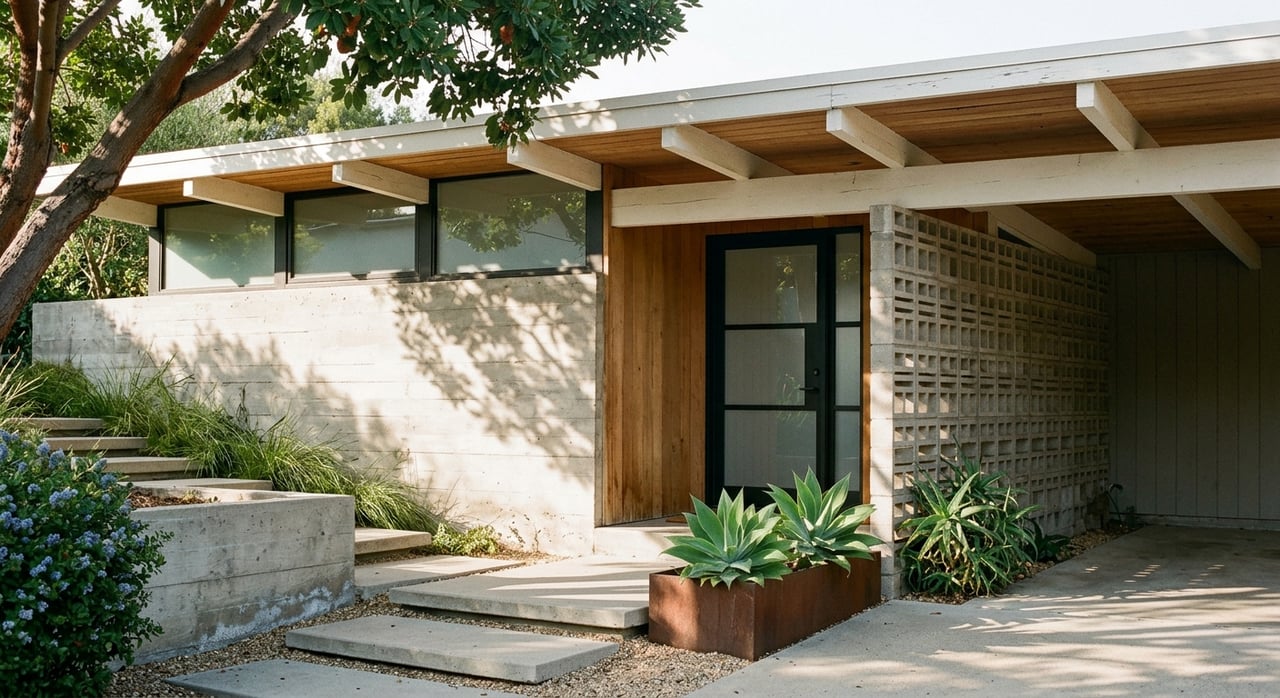
If you have ever walked Silver Lake and felt like the houses were telling you something, you are not imagining it. This neighborhood reads like a layered design story, with streetcar-era homes, 1920s Spanish Revival streets, and dramatic modernist houses stepping down steep hillsides. If you want to understand what makes Silver Lake feel so visually distinct, this architecture walk will help you know where to go, what to notice, and how to see the neighborhood with a more informed eye. Let’s dive in.
Why Silver Lake rewards walking
Silver Lake works especially well as an architecture walk because its housing stock was built in phases rather than all at once. SurveyLA identifies the Silver Lake, Echo Park, and Elysian Valley area as one of Los Angeles’ most important concentrations of Early Modern, International Style, and Mid-Century Modern residences. The Silver Lake Residential Historic District alone includes 1,171 properties with a mix of Period Revival and Mid-Century Modern architecture.
That variety gives you more than a row of similar homes. You get a neighborhood that feels like a timeline of Los Angeles domestic design, from early subdivision-era houses to 1920s Mediterranean and Spanish Revival tracts, then later modernist infill and multi-family forms. It feels lived-in, layered, and surprisingly cohesive.
The setting matters too. The Silver Lake Reservoir Complex began as open reservoirs in the early 1900s and still functions as both a water-system facility and a community amenity, according to LADWP. Around it, curving streets and hillside stairways shape how you move through the neighborhood, which is why Silver Lake is best explored in short walking segments rather than one long flat loop.
What makes the homes feel storied
Silver Lake is not just about famous architect houses, even though it has those too. What gives the neighborhood its character is the way many housing types sit side by side, including single-family homes, duplexes, triplexes, bungalow courts, courtyard apartments, and garden apartments documented by SurveyLA.
That mix gives the area a sense of continuity. Instead of feeling like a preserved set piece, Silver Lake feels like a real neighborhood where different eras of Los Angeles housing are still visible from the sidewalk. For buyers who care about architecture, that is often the magic.
You also see how the terrain changes the design. Many homes are elevated above the street, reached by short stair flights, retaining walls, and compact gardens. In Silver Lake, the hillside often reveals a house in layers instead of all at once, which makes walking the block part of the experience.
Best route for a self-guided walk
A practical route follows the neighborhood’s natural architectural clusters. This is not an official trail, but it reflects how the standouts are actually arranged across the area.
Start at the reservoir edge
Begin with reservoir-rim viewpoints around Silver Lake Boulevard. This gives you a feel for the topography first, which helps the rest of the walk make sense. You start to see how slopes, curves, and views shaped the homes built around them.
This opening segment is less about one specific facade and more about orientation. The reservoir edge helps you understand why Silver Lake architecture often feels cinematic, with houses positioned to engage light, hillside contours, and long sight lines.
Move to the modernist pocket
From there, continue to the area near East Silver Lake Boulevard and Earl Street. This is where the Neutra Colony Residential Historic District sits, directly east of the reservoir. The district contains ten architect-designed Mid-Century Modern or Late Modern residences with features like ribbon windows, deep setbacks, hedges, and rear garages.
This stretch shows Silver Lake’s modernist side in a concentrated way. Here, the architecture feels cleaner and more experimental, with houses designed to work with slope, privacy, and outdoor space rather than formal front-facing symmetry.
Continue through Micheltorena, Avenel, and Silver Ridge
This next segment brings in some of the neighborhood’s best-known modern anchors. Nearby examples include VDL Research House II at 2300 Silver Lake Blvd., Silvertop at 2138 Micheltorena St., the Lautner House at 2007 Micheltorena St., Avenel Cooperative Housing at 2849 Avenel St., and Morris Studio at 2390 Silver Ridge Ave.
Taken together, these stops show how Silver Lake modernism uses glass, terraces, structure, and the hillside itself as design material. You can read each house differently from the street because the slope is not hidden. It is part of the architecture.
Finish south of the reservoir
Wrap up in the Sunset-adjacent streets south of the reservoir, where the neighborhood shifts into earlier residential patterns. Rowland Heights and Mabery Heights are especially useful if you want to compare Silver Lake’s modernism with its Spanish and Mediterranean roots.
Ending here gives the walk a strong narrative arc. You begin with landscape and modern form, then finish in streets where 1920s homes, small apartment forms, and hillside streetcar-suburb planning still shape the block-by-block experience.
Spanish Revival streets to explore
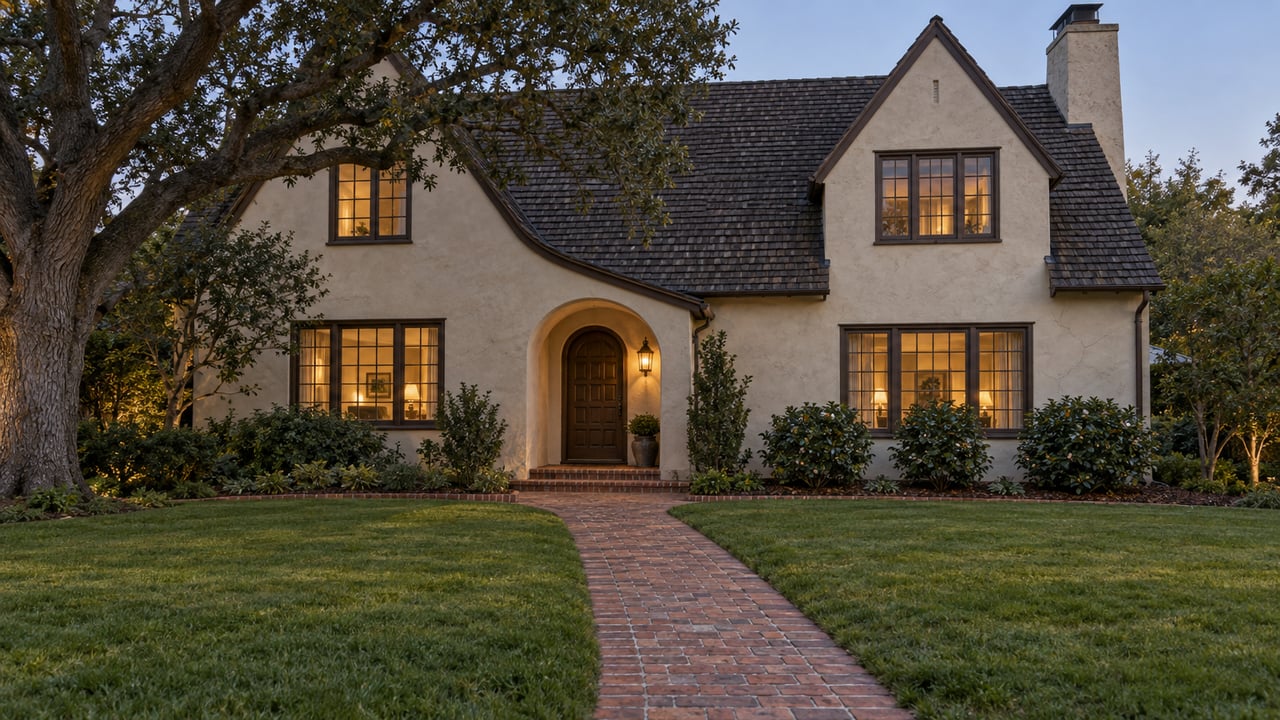
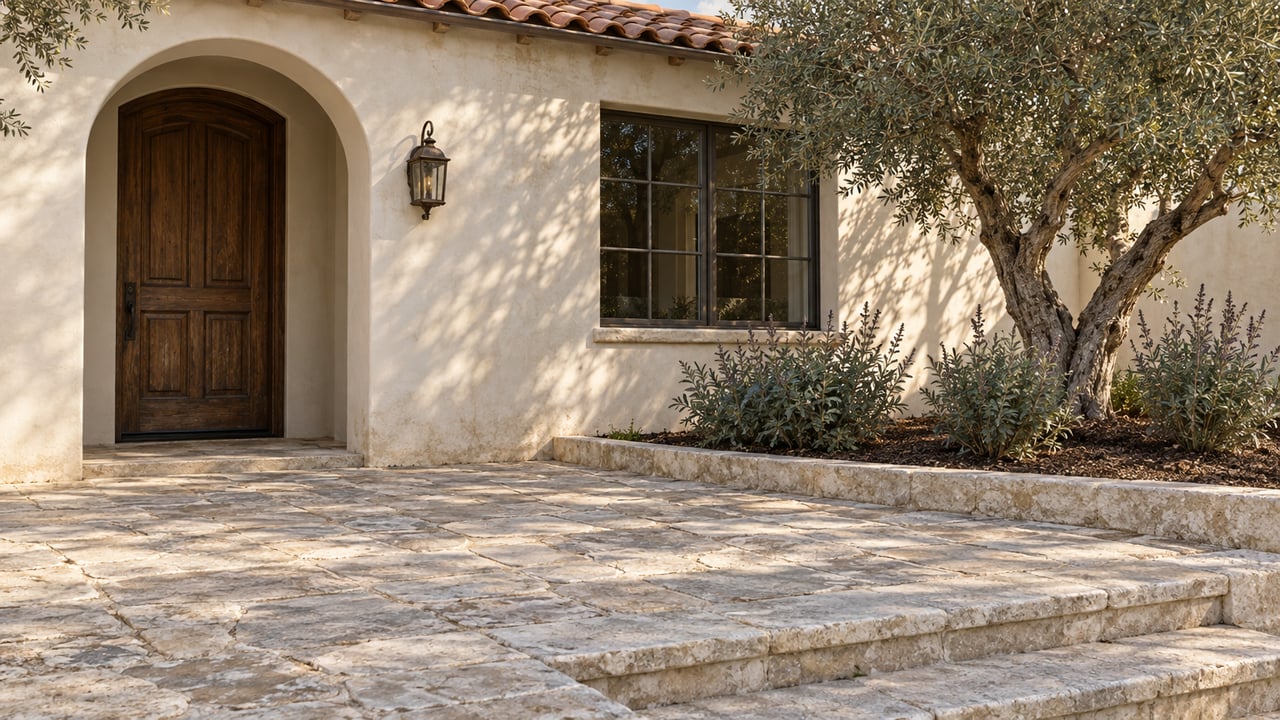
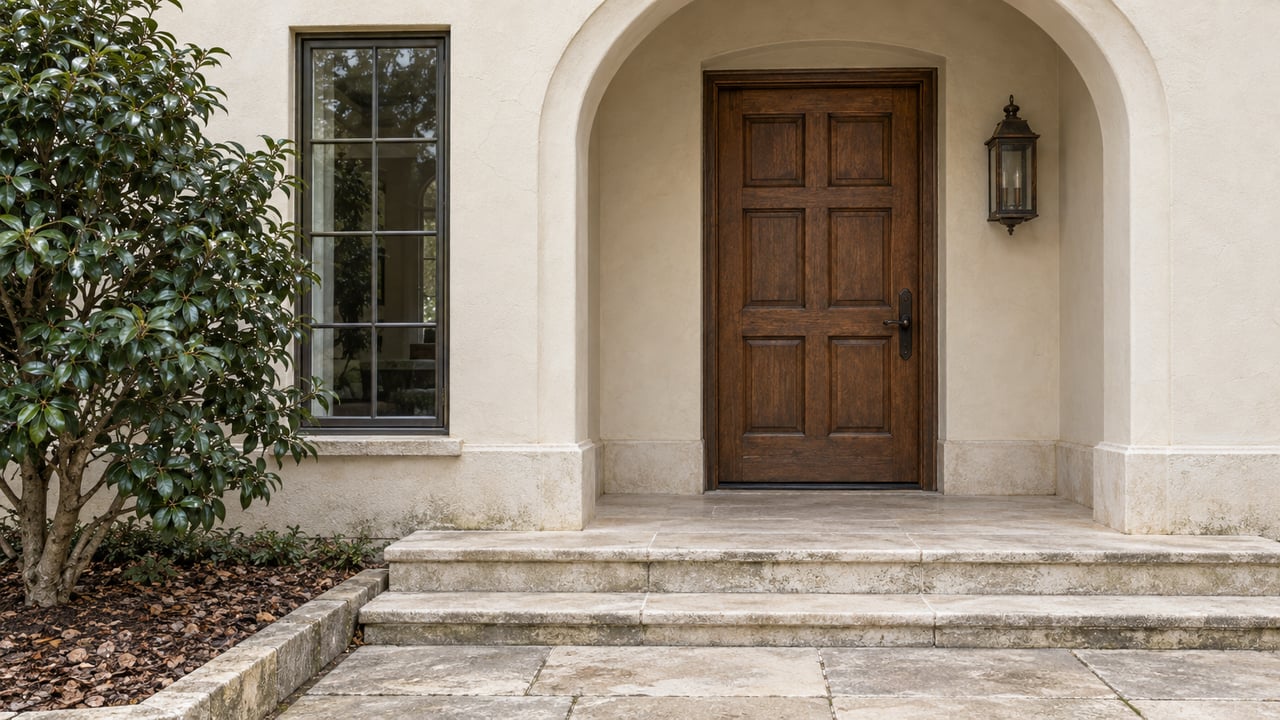
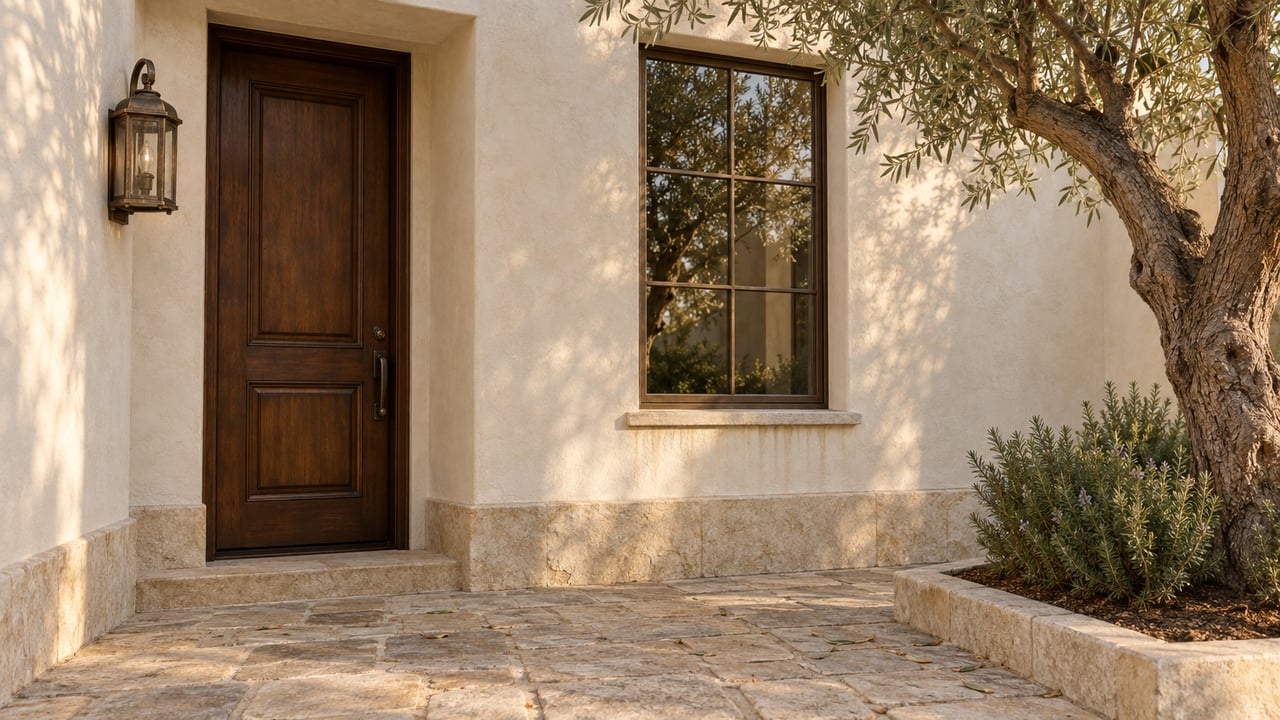
If you are drawn to texture, arches, stucco, and stair-stepped hillside entries, Silver Lake’s Spanish and Mediterranean pockets are worth slowing down for.
Rowland Heights
Rowland Heights is bounded by Sunset Boulevard, Marathon Street, Silver Lake Boulevard, and La Fayette Park Place. According to district reports, most of its 1920s homes are Mediterranean Revival or Spanish Colonial Revival, with shallow setbacks, small front lawns, elevated entries, concrete steps, and a mix of houses, duplexes, bungalow courts, and courtyard apartments.
This is one of the best places to understand how architecture and housing type overlap in Silver Lake. You are not just looking at one style. You are seeing how a whole neighborhood pattern came together during the streetcar-suburb era.
Mabery Heights
Mabery Heights, bounded by Sunset Boulevard, Westerly Terrace, Micheltorena Street, and Berkeley Avenue, has an even stronger Spanish feel. The district report notes that a majority of its homes are Mediterranean Revival or Spanish Colonial Revival, shaped by steep terrain, winding streets, stairways, narrow sidewalks, and shallow setbacks.
This pocket has a compressed, hillside rhythm that suits walking. The streets themselves help frame the architecture, and you notice details gradually as you move uphill or around a bend.
Childs Heights
Childs Heights, near Sunset, Marcia Drive, Hyperion Avenue, and Maltman Avenue, is another early subdivision tied to the old Sunset streetcar pattern. It is a useful add-on if you want to broaden the early residential chapter of your walk.
Here, the interest comes from context as much as style. The street layout and subdivision history help explain why Silver Lake developed with so many small, varied residential forms instead of one single visual formula.
Modernist icons to notice
Silver Lake’s most famous houses often get the attention, and for good reason. They show how bold modern architecture could adapt to difficult lots and still feel deeply connected to place.
VDL Research House II
VDL Research House II is one of the neighborhood’s defining modernist landmarks. It represents Richard Neutra’s glass-forward experimentation and shows how Silver Lake became a testing ground for new ideas about light, openness, and urban living.
What matters on the walk is not only the architect’s name. It is the way the house participates in the street and the landscape, using transparency, structure, and layering instead of ornamental display.
Silvertop and the Lautner House
Silvertop and the Lautner House show a more sculptural approach to hillside design. These homes use steep-lot siting, sweeping forms, and a strong relationship to views, proving that the slope is not a constraint to work around but a design opportunity.
Seen from the public street, they help explain why Silver Lake has such a strong modern identity. The neighborhood’s terrain invites architecture that feels dynamic instead of static.
Avenel and Morris Studio
Avenel Cooperative Housing and Morris Studio add more range to the story. Morris Studio, described as a three-story glass box, and Avenel’s cooperative housing concept show that modernism here was not one-note. It could be experimental, communal, compact, or highly individual.
If you love homes that make design choices visible, this part of the walk delivers. You can read structure, proportion, and site strategy right from the sidewalk.
What to look for by style
Even if you are not an architecture expert, a few visual cues can make the walk much more rewarding.
Spanish and Mediterranean details
Look for:
- Low-pitched clay-tile roofs or red-tile parapets
- Smooth stucco walls
- Round arches
- Courtyards
- Wrought-iron railings or window grilles
- Small porches or balconies
- Limited exterior ornament
In Silver Lake, these homes often sit above the street. That means the retaining wall, stair, gate, and garden can be just as important to the overall composition as the house itself.
Mid-Century Modern cues
Look for:
- Long, low profiles
- Flat or low-sloped roofs
- Generous glass openings
- Steel or concrete structure
- Indoor-outdoor flow
- Floor-to-ceiling windows
On steep lots, some of the strongest examples step down the hill rather than sitting on one level plane. In Silver Lake, that approach is part of what makes the architecture feel so site-specific.
Organic Modern and International influences
Look for:
- Glass walls
- Built-ins
- Terraces
- Cantilevers
- Minimal ornament
- Designs that treat the lot itself as part of the composition
This is where Silver Lake can feel like an open-air design museum. Many of the key houses are shaped to be read from the street, from the hillside, and from broader reservoir views.
A few practical etiquette tips
Most of the standout homes on this walk are private residences. Several Los Angeles Conservancy listings specifically identify them as private residences and say not to disturb them.
That means the best approach is simple:
- View from the sidewalk only
- Do not enter private property
- Do not block driveways or stairs
- Keep your voice and photos respectful
- Treat the neighborhood as a lived-in residential area, not a set
That approach makes the experience better for everyone. It also lets you appreciate the architecture the way it was meant to be encountered, from the public realm and in conversation with the street.
Why this walk matters for homebuyers
If you are home shopping in Los Angeles, Silver Lake offers a useful lesson. Character is not just about a pretty facade. It often comes from how a home sits on its lot, how it meets the street, and how its era shows up in materials, massing, and plan.
Silver Lake also reminds you to look beyond single-property marketing. The value of a home with story often includes the surrounding housing fabric, the rhythm of the block, and the architectural continuity of the area around it.
For design-minded buyers, that context matters. For sellers of architecturally distinct homes, it matters too, because the right presentation should connect the property to the neighborhood’s bigger story.
If you are thinking about buying or selling a home with character in Los Angeles, working with people who understand architectural detail, neighborhood context, and visual storytelling can make a real difference. That is exactly where Character Homes comes in.
FAQs
What makes a Silver Lake architecture walk different from other Los Angeles neighborhood walks?
- Silver Lake stands out because it layers streetcar-era houses, 1920s Spanish and Mediterranean homes, and major modernist residences within one hillside neighborhood shaped by the reservoir and curving streets.
Which part of Silver Lake has the best modern architecture to see from the street?
- The area near East Silver Lake Boulevard and Earl Street is one of the clearest modernist pockets, including the Neutra Colony Residential Historic District and nearby landmark houses along Micheltorena, Avenel, and Silver Ridge.
Where can you see Spanish Colonial Revival homes in Silver Lake?
- Rowland Heights and Mabery Heights are two of the best areas to observe Spanish Colonial Revival and Mediterranean Revival homes, especially in streets south of the reservoir near Sunset Boulevard.
Can you tour the famous modern houses in Silver Lake?
- Most of the best-known homes are private residences, so the appropriate way to experience them is from the public sidewalk without disturbing residents.
What architecture details should you notice on a Silver Lake walk?
- Look for stucco walls, arches, tile roofs, stair-stepped entries, flat roofs, large glass openings, terraces, and hillside designs that use slope and views as part of the architecture.
Is Silver Lake mostly single-family homes?
- No. SurveyLA documents a broader housing mix that includes duplexes, triplexes, bungalow courts, courtyard apartments, and garden apartments alongside single-family residences.